Friday, February 27, 2015

Zoos Are Helpful For Animals and their Health

Zoos are created to be “institutions for exhibiting and studying wild animals.”

Big Cats
Source (http://www.czs.org/Brookfield-ZOO/Zoo-Animals/Big-Cats)

According to  Gale Science in Context from the article "Zoo" published in  Environmental Encyclopedia, a lot of thought goes into designing a zoological garden and they are very important because Zoo's are created for and studying wild animals, but t Read the Q & A below to learn more.

Q: How are zoos designed?

A: Zoological gardens and parks are complex institutions to design. Many factors are influenced when designing these such as, design, staffing, economics, and politics. The design of parks are influenced by the needs of the animals such as, “light, temperature, humidity, cover, feeding areas, opportunities for natural behavior, the requirements of the staff  such as, offices, libraries, research and veterinary laboratories, garages, storage sheds, and amenities for visitors, for example, information, exhibitions, restaurants, rest areas, theaters, and transportation. All of these needs are crucial for designing a zoo and if they are not met, the zoo will not be a success.

Q: How large do zoos have to be?

A: Zoos size can vary from as little as 2 acres to as much as 3,000 acres. Also, animal living spaces may range from small cages to fenced-in fields. The proper size for each living space varies the type of animal, the number of them living in that one space, and the type of landscaping the specific animal needs. In small zoos, less space is available and therefore, most living spaces are small or just simply caged in areas, but in larger zoos, more space is available. Enclosures tend to be bigger, and the landscaping is generally more elaborate. Zoos vary in size but are always designed to be most helpful for the animal’s, and their quality of their living spaces are always the zoos first priory.

Q: Why should zoos be kept around, what is their importance?

A: They should stay around because they are a way to educate society about our worlds wild life animals. They are also important because they help zoologists research and learn more about rare animals, as well as, breed endangered species to attempt to keep the species alive. Therefore, zoos are actually important and are not as harmful to the animals as many think.

Discussion Question: 
Although Zoo's have argued that they are important for the education of animals to the younger generation and to society, do you believe that is a valid argument or are they just trying to cover the fact that zoo's have been proven to be very harmful to animals and their health? 

Future Research:
Do certain animals thrive in captivity, or do all animals suffer from living in zoos?

Replacing Limbs with Realistic Prosthetics

Image Source: www.independent.co.uk


In the article, 3 Austrian patients were fitted with a prosthetic lower arm and hand that responds to signals from the brain. Effectively making it controlled the same way you control your real hand, only not as accurate. Unlike previous procedures similar to this one, these patients had nerve damage and could not feel or use their limbs. They then had them amputated and replaced with the prosthetic, as opposed to already missing the limb. All have shown improvement.
I find it interesting that these patients made the choice  to have a limb amputated, even though an amputation was not necessary. I wonder if in the future more people, even those whose arms are working normally, will replace their body parts with prosthetics if the technology makes them superior to our normal limbs. That is probably a long way away for limbs, but other parts of the body could be easier to recreate.

1)  Do you agree or disagree with amputating a limb to replace it with a prosthetic?

2) Do you think prosthetics will one day get on the same level as a real limb, or even superior?

Wednesday, February 25, 2015

Is your Ignorance the cause of hate?

                                                           
http://images.sodahead.com
     Below are 10 Interesting Facts from a Huffington Post article by Stuart Muszynski who is the CEO of PurpleAmerica. 
                                                         
                                                               Why do you hate?
          
1. The first thing we need to do to stop the hate in our lives is to re-evaluate our core values and what we think we know. From the reading I understand that most people hate when they don't know what's really going on. For example, when I was in Physics last year, I hated it because I didn't understand it. I mean this is a very vague example, but there are several people in the World that hate others without even knowing them. 

2. It's hard to understand how others feel because our world is becoming more complex in the technological world, which doesn't allow us to see the real feelings hiding behind a computer screen. I though this was really fascinating because most people don't realize what they say online may not be taken in the way they expected it to be.  

3. I found out that countries like Germany and Sweden made it mandatory to teach moral education in their schools, but most schools in America don't have classes like that. 

4. The Maltz Museum of Jewish Heritage in Cleveland has been giving out scholarship money of $100,000 for the past five years to winners of its "Stop the Hate: Youth Speaks Out. I think this is a great encouragement for people to stop hating anything. If i was offered that kind of money for scholarships I'd stop hating even the worst people in my life. I guess it's just how you look at the incentives in this case. Would you rather hate someone and get nothing out of it, or stop hating them and get money?

5. Two professors from Yale discovered that babies and toddlers preferred puppets that showed traits of being kind and helpful. They ended up concluding that both babies and toddlers have a natural understanding of morals.But at the same time they discovered that both subjects liked it when people are nice to people similar to them, and liked it when they hurt things different from them.

6.When you are joking around about someone you should understand that not all your jokes are going to be taken in a positive connotation. So, it would be wise to not make those comments in the first place because all it does is make others feel bad and also makes you look rude.

7. Several people who have gotten bullied rise out of the fear and start sharing their stories. For example in the article "a girl told her story about being called "weird" and "disgusting" because she had alopecia areata, a medical condition that caused her hair to fall out. She overcame her own shame by wearing a wig, turning to public speaking, and becoming the national spokesperson for Wigs for Kids."

8.In several parts of the country there are still extreme cases of bullying. In the article it was mentioned that a girl that was the only Caucasian at her all African American school was beat up, and it took her over a year to recover from both the physical and mental damage. 

9. I've learned from the article that it is really comforting to know that you aren't the only one in the world suffering from other peoples hurtful words. 

10.It's very interesting to see how the things that you see on an every day basis effects one person or another in so many different ways. Like I mentioned before it's always about perspective. 

 Future Research Question: How are we all different in making decisions?

Monday, February 23, 2015


  The End is Coming for Many Species!

It seems like humans and nature itself are destroying species, causing them to cling onto life everyday. 


  - Photo by Nonie / Wikimedia

This Q&A is based on an article by Jennifer Bove who is an Endangered Species Expert. 

Q. Why is the introduction of an exotic species to a habitat bad for native species in  that environment?
A.Exotic species often have a predatory or competitive advantage over native species, which have been a part of a particular biological environment for centuries. Even though native species are well adapted to their surroundings, they may not be able to deal with species that closely compete with them for food or hunt in ways that native species has not developed defenses against. As a result, native species either cannot find enough food to survive or are killed in such numbers as to endanger survival as a species.

Q. Why is it important to preserve endangered species?
A. Preservation of plants and animals is important, not only because many of these species are beautiful, or can provide economic benefits for us in the future, but because they already provide us many valuable services. These organisms clean air, regulate our weather and water conditions, provide control for crop pests and diseases, and offer a vast genetic "library" from which we can withdraw many useful items.

Q. Are humans to blame for habitat destruction and how does habitat destruction endanger species?

A.The trouble is, humans take up a lot of space on the planet. Not only do we build houses in wild animal habitats, we clear forests to get lumber and to make fields where we farm food. We plow up native plants to grow miles and miles of single crops like corn and wheat. We drain rivers to bring water to our crops, and many of our farming methods strip the soil of its nutrients and microbes. We pave meadows to make streets and parking lots.As we're busting around making these "developments," we destroy animals' habitats and pollute the natural landscape with petroleum products, pesticides, and other chemicals. These actions kill some species outright and push others into areas where they can't find the food and shelter they need to survive.

FUTURE RESEARCH: Do zoos and other forms of commercial use of animals benefit their preservations? 

Background Check on Buddha

 Title of Article: Buddha Database: Student Resources in Context

Everyone has heard at least one or two quotes from the infamous Buddha, but how much do we really know about him? I decided to start my research with the background of Buddha and how he decided to teach Buddhism in the first place. In the article, "Buddha" that I found in the database, Gale Resources in Context, they told the steps of Buddha's upbringing and how it led him to the lifestyle of Buddhism.

Source: http://www.artisansdangkor.com/shop/96-237-thickbox/buddha-under-tree.jpg
10 Main Points to Article:


  1. Buddha (also known as Siddhartha Gautama) founded Buddhism in India in the 6th century B.C. A week after he was born, his mother died. His father, Suddhodana, was a warrior prince of the Sakya clan. Suddhodana then had wise men predict his son’s future. They said that he was going to be a king or religious teacher when he grew up. In order to keep his son from following a religious life, Buddha’s father raised him in luxury and sheltered him from suffering.
  1. When Buddha was sixteen years old, he married a neighboring princess and had a kid a few years after. Since he now had more freedom and was still curious about the world, he decided to begin taking chariot rides outside the palace walls. It is said that on these rides he saw an old man, a sick man, a dead man, and finally a monk. These sightings were the first times he ever encountered suffering in the world.
  1. After being overwhelmed with sorrow from seeing this suffering, he decided to become a monk and leave his wife and son at the age of 29 in hopes of ending this suffering in the world.
  1. He tried finding the solution to ending suffering in the world by doing yoga, which did not help, and began to fast and self-torture. He then decided to try and find a middle ground between luxury and the monk’s life.
  1. At the age of 35, he sat underneath a fig tree one night in the village of Bodh Gaya in northeast India. In the morning, he awoke to the answers that he had been searching for the past couple years.
  1. This is when became known as the Buddha (“Enlightened One”) and “and the tree became known as the Bodhi Tree (‘Tree of Enlightenment’).”
  2. He soon discovered that life is guided by Four Noble Truths:
a. Life is full of sorrow. All living things go through this suffering as they experience death          and rebirth in a continuous cycle (called samsura)
b. This sorrow is brought about by desires and attachment to worldly things.
c. People can overcome their desires and suffering by reaching nirvana, a state of inner peace and happiness.
d. Nirvana can be attained by living according to the Eightfold path.
  1. “To follow this [Eightfold] path, people must know the Four Truths, resist doing evil things, say nothing offensive to others, respect life and property, work jobs that do not hurt any living thing, have only good thoughts, pay attention to their feelings and bodies, and practice proper concentration.”
  1. During the next forty-five years of his life, Buddha decided to preach his message (dharma) which means “saving truth”.
  1. Buddha continued to preach until he died around the age of eighty, about 483 B.C. According to Buddhist teachings, he had reached final nirvana.”


Future Research Question: How has Buddha's teachings impacted the people of the past and how does it continue to have an impact on people who practice Buddhism?


No Money in Tennis


The 42nd best tennis player in the world makes the same amount per year as the lowest of Major League Baseball players.
        SOURCE:    http://www.marketwatch.com

Steven Kutz, an editor at Marketwatch,  writes about how little tennis professionals make compared to other major sports in "How much do tennis players earn compared to other athletes?" 

"Of course, players in major team sports are salaried, while individual sport athletes are paid by winnings. But what about golf? At a glance, it seems like the most similar to tennis. Yet the No. 32 earner on the PGA Tour this year, J.B. Holmes, has made over $2 million."

 I often hear the argument that the reason tennis players often make less is because the are paid on how well they do instead of having this salary that many other athletes in other sports have. I felt like this statement really does a good job of refuting that argument because as you can see the 32nd golfer has made over $2 million dollars. It does not say above in the quotation, but in the article it states that the 32nd tennis player made about $750,000. As you can see even when comparing individual sports the numbers are still very significantly different.

"In tennis, players have to pay their own expenses. In addition to paying salaries to his coach and his trainer, Granollers estimates that he spends about $200,000 a year on expenses for the three of them. (They fly business-class on longer flights.)"

The fact that the players have to pay for their own expenses makes the situation even worse. In basically any other sport the team pays for all the travel, hotel room and anything else of that nature. In tennis this is coming directly out of the players income. So 32nd ranked Fernando Verdasco is really only making 550,000 dollars if you use Granollers figure on expenses.

Not only does this mean that the players are making less, but it makes it extremely hard for players who are just starting out to rise to their true potential. For many young players. especially ones without much money, they literally need to win matches to be able to afford to go to the next tournament. If they have a couple bad weeks in a row they might not have enough money to go to the next tournament and have to go back home. Therefore putting a stand still on their career. Tack on top of that paying for expenses and this will often have very good players actually losing money.

'“If you take figures from golf, [Rory] McIlroy has earned approximately $7 million this year, like Novak,” he said. “The No. 30 [golfer] has earned over $2 million this year. If I don’t count my doubles earnings, I made little more than $500,000. That is a 1-to-14 ratio compared to about 1-to-3 in golf.”'

Not only are the top players in other sports making more than the top players in other sports but the gap from the top to lower levels is extremely wider in tennis. It is incredible to me that the ratios of golf to tennis are that much different. It is really unfortunate because tennis is such a great sport and so many people watch and play worldwide, but for whatever reason there isn't nearly as much money in it as in these other major sports. It doesn't seem right to me at all that someone who is so amazing at a very competitive international sport can be paid so little. If somehow they were able to get more money into it I think that the sport would be able to grow even bigger and better than it is. It deserves to grow like this and I hope that in the future it is able too.

FUTURE RESEARCH: Do certain countries help players out more, especially the young ones just starting out, more than others? What is the difference and why from singles players to doubles players?

The Progression of an Entrepreneur

www.lakegeorgemirrormagazine.com
One would never imagine that treating an old man kindly while working a menial job would impact your life so greatly, especially when you had no idea who that old man was. Yet, this behavior is what created the basis for an incredibly prosperous career for William Keeney Bixby, an entrepreneur and my great-great-great-grandfather who began his work in the late 19th century. In the biographical note from archives from the 2003 University Libraries at Washington University of St. Louis, I was able to learn more about how W.K. Bixby cultivated this career.

“In 1875, after graduation from high school, William Bixby went armed with a letter from Jefferson Davis to the Governor of Texas, a Confederate veteran, who got the sixteen-year-old a job as night watchman and baggageman for the International Great Northern Railroad at Palestine, Texas. An Algerish touch to this story is the part played by the roughly dressed old man who frequently dropped around at night and pestered the boy with apparently idle questions about railroading. Because the boy was courteous and intelligent, at the end of a year the old man revealed himself as H. M. Hoxie, president of the railroad. The result was promotion to the post of general baggage agent in San Antonio for young Bixby. … Mr. Hoxie's benign influence was not over. When he became president of the Missouri Pacific Railroad, the couple moved with him to St. Louis, where Bixby became printing and stationery buyer for all the Gould lines.”

I thought that this passage was particularly interesting because it shows how William initially began his career. I knew that he had started off with a fairly modest job, but had no idea that connections from that job had lead him to develop his successful career. I believe that this truly demonstrates the concept that is preached by many that having good social skills and social connections will allow you to thrive in the business world, as well as just in life itself. Also, the procession of jobs that William went through shows that there are often many steps to becoming a successful entrepreneur such as himself.

“After several years in St. Louis, William McMillan, president of the Missouri Car and Foundry Company, offered the rapidly rising young man a still better job. Within the now-traditional year he again attracted signal attention to himself. His employers had made a ruinous contract for the purchase of pig iron and by his direct honesty Bixby renegotiated the contract, making a long-range, profitable ally for his company. At the age of thirty-one he became vice-president and general manager.”

Once again I thought this passage was significant because it shows how William progressed into being the successful businessman that he was and thus how he acquired his money. One can assume that William’s knowledge of the business world had become a little more extensive at this point in his life, as he makes a critical decision with renegotiating the contract for his company. I knew that William had had an important relationship with William McMillan, but I did not realize that it really established him as a force in the corporate world, with one of his first major leadership jobs.

“Soon the company became such a large factor in freight-car building that it found it advantageous to merge with the Peninsular Car Company, the first step in a series of mergers out of which came the American Car and Foundry Company, of which Bixby became President, and soon thereafter was elected chairman of the board. At the age of forty-eight, in 1905, he retired.”

This passage basically sums up the rest of William’s official business career. It interested me because I think the fact that he was able to come so far in the time that he did and retire by age forty-eight demonstrates his intelligence and entrepreneurial skills. Once again, I was impressed by William’s initiative to participate in multiple mergers, which clearly benefitted his company. I believe that since he was able to retire by age forty-eight that allowed him to dedicate more time to both leisure and philanthropic activities.

DISCUSSION QUESTION:
What qualities allow a businessman/businesswoman to make crucial decisions pertaining to their work and money?

Queen of the Pacific


Sandra Ávila Beltrán, also known as the "Queen of the Pacific, " was arrested in Mexico City on September 28, 2007. Now she's free after more than seven years behind bars.
SUMMARY: In this article about the ‘Queen of the Pacific,’ Sandra Beltran, we learn all about how this woman has become a legend of sorts in Mexico. She has been in and out of prison for years now all to due with anything from drug trafficking to money laundering to helping other fugitives flee from authorities. It even mentions an investigation that went on saying Beltran received Botox treatments inside of prison! The controversy is that she was recently released from prison because a judge dropped the current charges against her saying it wasn’t fair for her to serve more time after she had already been tried for the same crimes in Mexico and the US previously.


ANALYSIS: I found it really interesting on how much attention this story got based solely on the fact that the criminal is a woman. I believe that if any man faced the same charges in the same scenario nobody would give it a second glance. But for whatever reason, the fact that it is a woman draws so much attention to it that it becomes international news. It draws in the debate of how men and women are portrayed in society differently. There are certain roles that are thought of to be filled by men and roles thought of to be filled by women. This obviously is a role that typically a man would fulfill and so when it turns out to be a women it turns the heads of everyone.


DISCUSSION QUESTIONS: If someone is charged of a crime in one country should they have the right to not be tried for that same crime later in another country?

If Sandra Beltran were a man and did the exact same things would she have gotten anywhere near as much media and attention and why would this be?


Somalia Extremists Threat

SUMMARY:
In an hour long video released by an Al-Qaida linked terrorist group from Somalia on Saturday, Muslims were encouraged to attack shopping malls in the United States, Britain, and other western countries.  The terrorists in the video covered their faces with scarves, and also warned Kenya of another attack like the one of 2013 that resulted in the deaths of 67 people.
In the video, the terrorists specified malls such as the Mall of America in Minneapolis, the Westfield Mall in Stratford, England etc., and urged muslims to attack these malls.  The Department of Homeland Security and the FBI could not verify the authenticity of the video, but they have placed extra security precautions at the Mall of America and also told citizens to take extra caution.  Kenya has dismissed the terrorists’ video all together.


ANALYSIS:
I’ve realized that more and more terrorists are beginning to hide behind their computer screens.  First ISIS with many horrific videos of torturing and killing their prisoners, but now threats from an al-Qaida based group known as al-Shabab.  “Secretary Jeh Johnson called the video ‘the new phase’ of the global terrorist threat”.  Terrorists feel more confident behind a computer, making it easy to believe that their threats are real, when in actuality, they could be acting alone, or have no action to carry out, they are just causing trouble because they can.  

DISCUSSION QUESTIONS:
It is important to take all terrorism threats seriously, but how serious should we take virtual threats?
Do you believe these threats are just as serious as actual physical acts of terroism?

LINK TO ARTICLE:
http://news.yahoo.com/somalia-extremists-urge-attacks-western-shopping-malls-180611400.html

Sunday, February 22, 2015

Should Taxes Penalize the Rich?


The Progressive tax is an unstable tax system that is hard to trust because it can easily be manipulated by the people who have the power to change it and can prevent us relieving our debt fater. 


SOURCE: http://media.caspianpublishing.co.uk/

In an article from Money News, a website with advice from many financial advisors/journ titled "Steve Forbes: Flat Tax is Best Economic Fix", Steve Forbes gives his opinion and reasoning on why the flat tax is better than the progressive tax.


"The $200,000-to-$250,000 a year incomes President Barack Obama considers “rich” occur during a couple’s peak earning years, says Forbes, making increasing taxes on salaries unfair."


I agree with this statement because I personally believe that the way that Obama increases the taxes of people whom he may consider to be more successful is what is unfair. He may think that he is like a modern “robin hood”, taking from the rich and giving to the poor when in actuality, it is almost as if he is breaking the law and stealing. If we were to implement a flat tax, the tax system would finally be considered fair. It is not the people who are successfuls' fault that there are people who are in the lower class. They can still help the lower class, but it is not their duty to give away their money to them. Implementing a flat tax would not only be fair, but would also help the U.S. get out of debt in a shorter period of time. This passage captures the meaning of the article because it is a perfect summary of the article and is the best argument against progressive tax and for why the flat tax is better.


"Raising taxes on dividends, which Buffett implies we should do, destroys capital,” Forbes says. “And raising the tax on capital gains, where there is no certainty, as the market’s always reminding us, reduces risk-taking, which hurts enterprises for the future."


I agree with this statement because it is true that raising taxes on capital gains cause people with up and coming businesses to take less risks. Entrepreneurs will be too afraid to introduce new business because they are afraid of what they will be taxed on from their capital gain. If an entrepreneur were to start a business, that they had to put a lot of their own personal money into, that was not successful and did not make a lot of money, the tax system would take away some of what little they made. The tax on capital gain causes people to not make as much as they originally wanted or expected to get. The current tax on capital gain pretty much cheaps out the seller for their full amount of money they deserved. The flat tax could eliminate the tax on capital gain for individuals and decrease the tax amount on capital gains for businesses.

Discussion Question: In my next blog post, I plan on researching: how does the Progressive Tax compare to the Flat Tax?

http://www.moneynews.com/StreetTalk/Forbes-Flat-Tax-Economic/2011/09/20/id/411607/

Homeland Security says aware of no credible threat against malls

Visitors pose for a family photograph in front of an entrance to the Mall of America in Bloomington, Minnesota July 2, 2013. REUTERS-Eric Miller
http://www.reuters.com/article/2015/02/22/us-usa-security-mall-idUSKBN0LQ0IY20150222
SUMMARY:

In the article “Homeland Security says aware of no credible threat against malls” we learn that despite a threat to the Mall of America and other shopping sites in the West by Somali-based Islamist militants, the U.S. Homeland Security Department said as of Sunday, February 22nd, it was not aware of any specific plot against U.S. malls. There had been some doubt about the credibility of the threat from U.S. and Canadian officials originally. Although, since the threat specifically mentioned the Mall of America, the West Edmonton Mall in Canada, and London’s Oxford Street and sites in Paris, it was still regarded as serious because as Homeland Security Secretary Jeh Johnson said, “Anytime a terrorist organization calls for an attack on a specific place, we’ve got to take that seriously.” A U.S. intelligence official said security officials are worried about a potential attack on U.S. soil by a solitary militant, but that the specific group that posed the threat, the al Shabaab group, has not appeared to gain much traction with most Somalis in the West, including in Minneapolis, thus lessening their fear.

ANALYSIS:
I was surprised that Homeland Security would not take this threat more seriously. I understand that they do not want to create a large commotion over something so negative that may not happen, but in my opinion the fact that specific places were named increases the severity of the threat. I hope that in the future, when there will unfortunately most likely be similar events, that Homeland Security will increase their security practices and how they consider threats.

DISCUSSION QUESTIONS:
  1. What do you think should be specific measures for how Homeland Security takes action on potential threats?
  2. How much should the public know about the work that Homeland Security is doing?

Cheers or Rage?


Imagine if a country simply took land from another country just because they thought they could...

Map of the Crimean Peninsula (source: maps-kid.com)


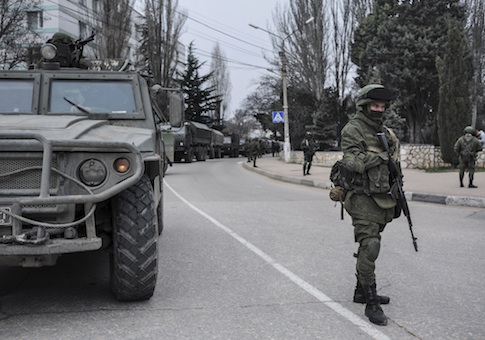
In the article, Ukraine Cries ‘Robbery’ as Russia Annexes Crimea from CNN.com by Matt Smith and Alla Eshchenko published on March 18, 2014, discusses the contrasting Ukrainian and Russian attitudes about According to Vladimir Putin, 97% of the residents of Crimea voted to separate the Crimean Peninsula from the Ukraine and join Russia.

Putin says that, "In our hearts, we know Crimea has always been an inalienable part of Russia."

Although Crimea was a part of the Ukraine, it had its own Parliament; however, the Ukrainian government in Kiev still had power over it. On the other hand, the Ukraine is not so happy about this.

The Prime Minister of the Ukraine, Arseniy Yatsenyuk claims that the annexation of the Crimean Peninsula is “a robbery on an international scale.”
Even though many that live in the Crimean Peninsula are Russians, it was still an important piece of land that belonged to the Ukraine. One reason why there is a strong Russian presence in the Crimean Peninsula is because Sevastopol is located there; the Russian Black Sea naval fleet is located there. Moreover, according to Putin, the 22,000 Russian troops “were already there” before any conflict. I don’t believe that these troops were casually stationed there. I definitely think that those troops were sent there to ensure the annexation of the Crimean Peninsula.
Regardless of the strong Russian presence, I absolutely believe that Russia did not have the right to annex the Crimean Peninsula. A country simply cannot take land from another country just because they think they can. It is very alarming that Russia was able to get away with this.
Russian Troops in Crimea (source: successimg.com)
Discussion Questions: Are Russia's actions justified in any way?
Should/how should the U.S. and other countries get involved in this?

The Evolution of Gaming

What if economists could experiment on people? What experiments might they run?

In an article I read from  The Washington Post titled; "The Economics of Video Games", game producers and economists explain how working on realistic MMO games is a beneficial investment for both parties. 

SOURCE: http://www.washingtonpost.com/

"It’s a sprawling economy, with more than 400,000 players participating in its virtual market — more people, in fact, than live in Iceland. Inflation, deflation and even recessions can occur. Which is why, from his office in Reyjkjavik, Guðmundsson leads a team of eight analysts poring over reams of data to make sure everything in Eve Online is running smoothly. His job bears more than a passing resemblance to that of Ben Bernanke, who oversees the U.S. economy from the Federal Reserve.

“For all intents and purposes, this is an economy that has activity equal to a small country in real life,” Guðmundsson says. “There’s nothing ‘virtual’ about this world.”
Guðmundsson runs a team of analysts who make sure that the in-game economy is running properly. A Massively Multi-Player Online Game (MMO), operates almost like the real world. Its interesting how inflation, deflation, and recession can occur in a virtual manmade game. One of the most common examples of this is Runescape with its Grand Exchange. Player can choose what price they want to sell items they have and based on this, the quantity supplied and demanded would change. For example, the main reason why I started to play Runescape again was becuase of its economy. One of the items that was easy for me to obtained went up more than five times the value. This made me return to the game and make more money. Guðmundsson's in-game economy operates the same way except it is more realistic and complex. You can barely call it virtual at this point. 
"Nowadays, many massively multiplayer online video games have become so complex that game companies are turning to economists for help. Without oversight, the games’ economies can go badly awry — as when a gambling ban triggered a virtual bank run in the online world of Second Life in 2007, with one bank alone costing players $750,000 in real-life money."
Since Guðmundsson's economy is so realistic it becomes necessary to involve economists. Economists can regulate the economy and avoid inflation, deflation, recession and other problems that the virtual game world is threatened to face. 
"But there’s a flip side, too. Just as video game designers are in dire need of economic advice, many academic economists are keen on studying video games. A virtual world, after all, allows economists to study concepts that rarely occur in real life, such as non-fractional-reserve banking, a popular libertarian alternative to the current banking system that cropped up in Eve Online. The data is richer. And it’s easier to run economy-wide experiments in a video game — experiments that, for obvious reasons, can’t be run on countries."

This is the revolutionary part. As the economists are helping the in-game economy to thrive and not collapse, they can experiment on the economy itself. With so many people playing the game and so many factors and variables to change, it behaves like an economist's sandbox. They can change the "world" and run experiments. Then they can record their data and find new ways to change the world in a much faster way. These are all things that is difficult or impossible to do in real life. 

“Economic theory has come to a dead end — the last real breakthroughs were in the 1960s,” says Yanis Varoufakis, a Greek economist recently hired by the video-game company Valve. “But that’s not because we stopped being clever. We came up against a hard barrier. The future is going to be in experimentation and simulation — and video game communities give us a chance to do all that.”
At least, that’s the dream. The reality, as always, is more complicated. Game companies are often wary of meddling economists trying to conduct experiments that suck the fun out of their virtual worlds. And some academics scoff at the notion that there’s anything to learn from universes filled with warlocks and starfleets. Game companies and economists may need each other. Now if only they could learn to share the controller.
The economic theory has remained stagnant and boring since 1960's. However the hard barrier of economic theory can only be resolved by using experimentation and simulation. The current nature of MMO's provides exactly that. Economists get to regulate the simulated economies and experiment the effects of multiple factors and variation. In turn, the game producers also benefit because it makes the game more realistic and keeps the simulated economy from collapsing. One problem that arises though is that the game may become too hard. Although some may argue that this may become a turn off for gamers who enjoy manipulating the game's mechanics to unfairly get successful (cheating), using video games can further research in a field that has been stagnant for a long time.


DISCUSSION QUESTION: If games become increasingly more realistic, how will this impact the players? How should game producers balance non-fiction with fantasy?


Saturday, February 21, 2015

How Did the 13 Colonies Survive Under Economic Oppression?

Imagine people crossing new frontiers, we know they faced dangers in nature but what about the economy?

SOURCE: http://www.landofthebrave.info/ 

A website, Education Portal, with videos and articles for teachers provided information about the The 13 Colonies: Developing Overseas Trade and University Groningen provided background on Colonial Economy.

In the early years before America had become a country, the state of the American economy was in a confused state. The huge population growth, from 40,000 in 1625 to 235,000 in 1700 due to immigration from England, greatly improved the state of economy in the colonies, leading the white population in the colonies to have a particularly high standard of living. However, to monopolize the Colonies, the British had installed the Colonial System, where the British put restrictions on what the colonies could produce and only permitted that the colonies trade with Britain. This created a heavily concentrated group of people who were all doing simple jobs that kept the villages running.

A large majority of those working did agricultural work in the pre-industrial society that the Thirteen Colonies were made up of. A Market Economy was established due to the processing of natural resources through mining, gristmills and sawmills, and with the export of products made agriculturally. Grains, such as wheat, rice, corn, Indian Corn and flour, and tobacco were the leading agricultural exports. The colonies were forced to depend on Britain for many of their commercialized, finished goods because the British instituted laws that made the colonists unable to produce these things within the colonies. Laws like this were to ensure that the British would make money and basically exploited the colonists into buying overpriced goods, because they had no where else to buy from.

In the beginning years, the colonists began to create a working society in the midst of Britain’s oppression. Their dedication to have success in the new world is vital to the success of the colonies, and later the new United States of America. The economy, although run by Britain, was shaped by the colonists through the exports and imports of the new world and developed into a independent and fully functioning economic system.


          I think that the oppression put onto the colonies by Great Britain was vital to the early success of our country. Without having to fight for what the people wanted and experiencing the abuses of Britain, colonists, and later Americans, knew what they wanted and didn’t want out of their country and their government. The establishment of the colonial economy also helped lead to the country’s success because if something failed financially in the colonies, Great Britain would take care of it; whereas if America had started out as a new nation by itself, it wouldn’t have had nearly as much success because if they struggled financially, the country probably wouldn’t have had survived. Although it was a trying time,  it made the future country and its’ citizens much stronger and more capable.

QUESTIONS FOR FURTHER RESEARCH:
  1. How did the oppression of Great Britain strengthen the Colonial Economy to prepare them for the American Revolution and future endeavors against Britain?
  2. What were the leading areas of economy that kept the colonial finances afloat?
  3. How did the colonists deal with the change of the economy as the colonies became more independent?